It began with smoke.
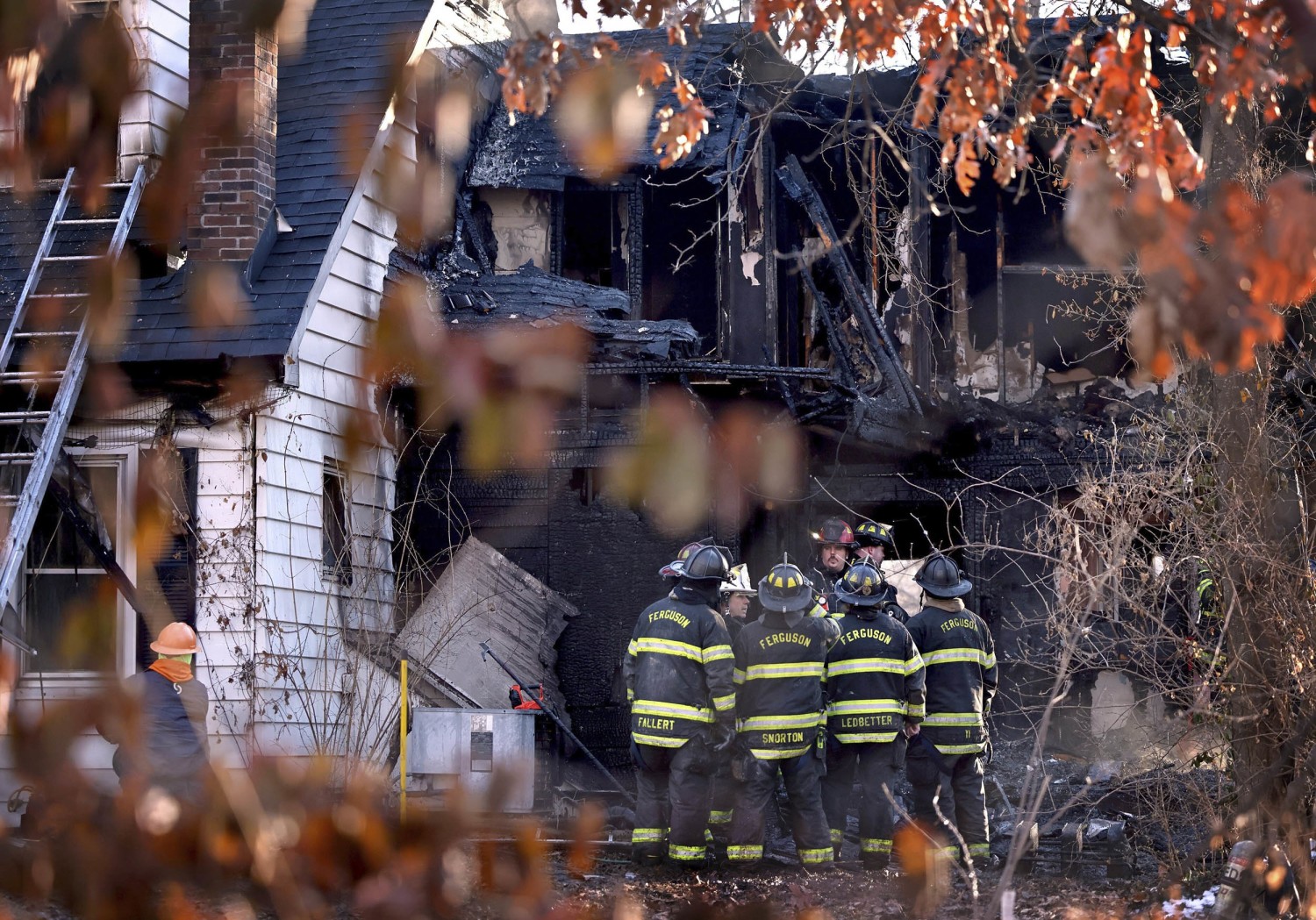
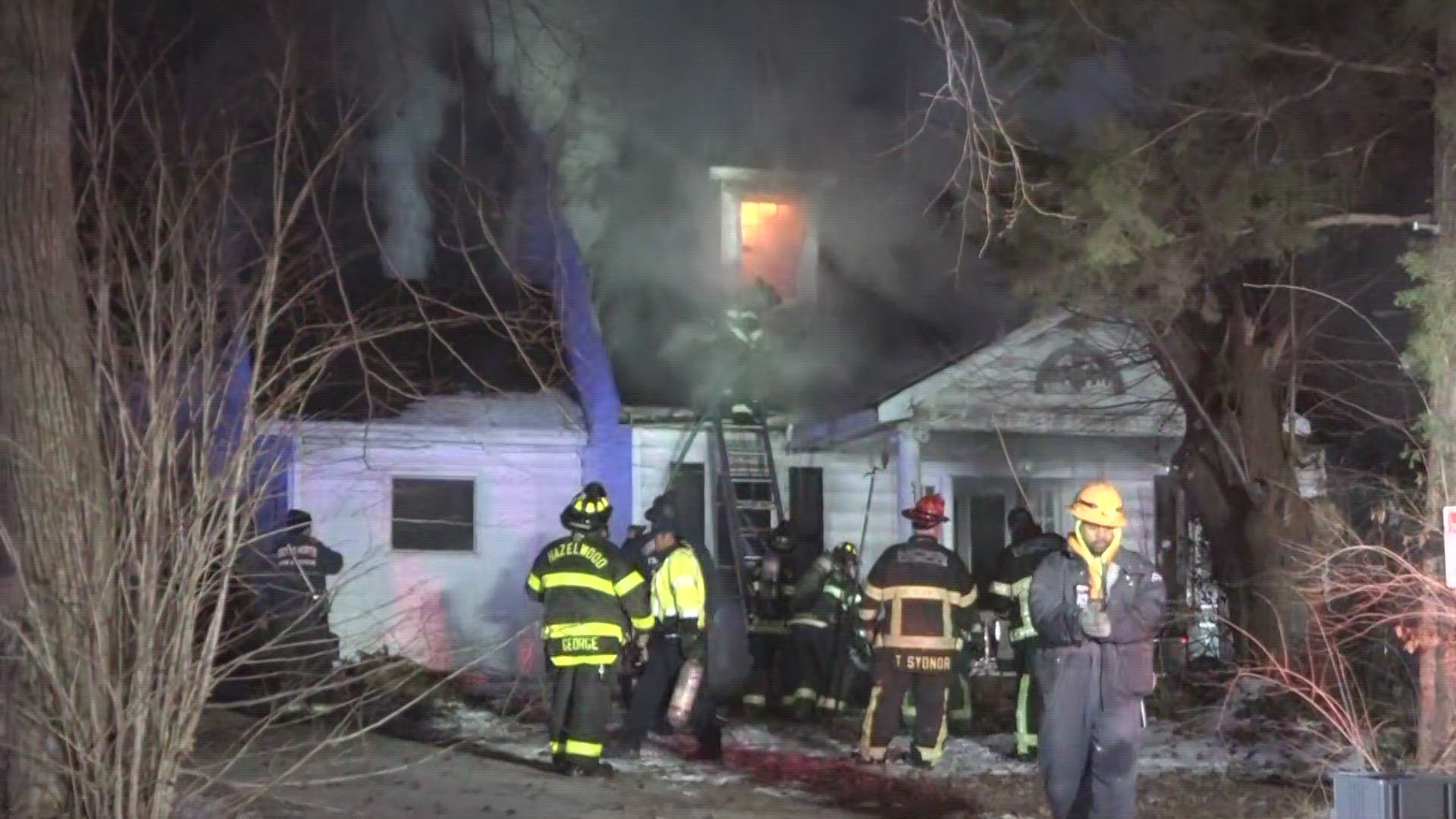
A quiet neighborhood in Ferguson, Missouri, jolted awake by the glow of flames rising into the cold February sky.
When first responders arrived, they expected a rescue. What they found instead was a tragedy so profound it left even seasoned firefighters shaken.
Inside the burning home lay 39-year-old Birdie Pruessner, a beloved educator and mother, alongside her four children — 9-year-old twins Ellie and Ivy, 6-year-old Jackson, and 2-year-old Millie.
All five were gone.
At first, it seemed impossible to comprehend. How could something like this happen? How could a mother, once celebrated for her compassion and devotion, end up at the center of such unfathomable devastation?
And yet, as investigators combed through the ashes, a heartbreaking truth began to emerge — one that revealed not just a single tragedy, but a reflection of something deeper, darker, and far more common than most would dare to admit.

A Night That Should Have Been Ordinary
On the night of February 19, 2024, Birdie’s house was calm, the kind of peaceful night that every parent treasures.
Her four children — bright, sweet, and full of life — were fast asleep in her bed.
Sometime after midnight, Birdie took to social media, posting words that now read like a haunting farewell.
“All my kids, peacefully sleeping in my bed… Knowing they are loved so fiercely that I’d do absolutely anything for them. This is my favorite moment.”
Hours earlier, she had written another post filled with warmth and faith:
“Us against the world. I’m so blessed to be their mama. They have a heart for the Lord and have overcome so much more…”
To her friends, these words sounded like gratitude — the musings of a mother reflecting on the beauty of her children.
No one could have guessed they were also her goodbye.
By sunrise, the house was engulfed in flames. And the woman who once spent her life teaching others how to nurture, to love, and to believe — had taken her own life, and the lives of the four souls she loved most.

The Woman Everyone Admired
To the outside world, Birdie Pruessner was a success story.
She was a Montessori specialist, the 2013 Missouri Teacher of the Year, and an assistant professor at Lewis & Clark Community College.
Her colleagues described her as passionate and kind — a woman who could walk into any classroom and make children feel safe, seen, and inspired.
She believed in hands-on learning, in empathy over discipline, and in nurturing not just the mind, but the spirit.
Her students adored her. Her peers respected her.
But behind the accolades, something fragile had begun to fracture.

The Private Battle No One Saw
In the months leading up to the fire, Birdie’s life had quietly unraveled.
Friends and family later revealed she was struggling with intense custody battles — disputes with both her ex-husband and a former partner that left her emotionally drained and financially burdened.
She tried to stay strong for her children. She smiled for them, prayed for them, fought for them. But inside, the exhaustion grew heavier.
Those closest to her described her as “overwhelmed,” “mentally exhausted,” and “trapped.”
She had begun to withdraw — not out of indifference, but out of despair.
In her private posts, she wrote about her fears of losing her children, of being misunderstood by the system, of trying to hold on when everything seemed to be slipping away.
It wasn’t one thing that broke her.
It was the weight of everything.

The Note and the Fire
When investigators examined the scene, they found something that stopped them cold:
a note, handwritten by Birdie, explaining what she intended to do.
It wasn’t rage that spoke from the pages — it was heartbreak.
A belief, however misguided, that what she was doing was an act of protection.
Authorities later determined that Birdie had intentionally set a mattress on fire, sparking the blaze that consumed the house and everything inside it.
She had planned it.
She had said her goodbyes online.
And she had done what no mother should ever have to even imagine — she took her children with her into the flames.

A Community in Mourning
The news rippled across Missouri like a shockwave.
Parents held their children closer that night. Teachers wept in classrooms.
Communities gathered at candlelight vigils, trying to make sense of the senseless.
“How could someone so loving, so devoted, do this?” one friend whispered through tears.
“She adored those kids. They were her whole life.”
But that was the paradox of Birdie’s final act — she did love them. Fiercely.
And that love, twisted by pain and mental illness, became the very force that led to tragedy.

The Mask of Functioning Despair
Birdie’s story is not just one of loss — it’s a window into how silent suffering hides in plain sight.
She wasn’t an outcast. She wasn’t unemployed. She wasn’t isolated.
She was everything we call successful.
But success is not armor.
Depression doesn’t always look like sadness.
And people who are drowning often do it quietly.
Experts call this phenomenon “high-functioning despair” — when people maintain appearances, continue working, and keep smiling, all while privately unraveling.
Those who suffer often feel trapped between shame and fear.
They tell themselves they have to stay strong. That asking for help would make them weak. That no one would understand.
Until, one day, the pain becomes louder than the hope.

When Love Becomes Desperation
For many, it’s impossible to reconcile — how can love coexist with destruction?
How can a mother’s affection turn fatal?
But psychologists who study filicide-suicide — cases where a parent takes both their own life and their children’s — often describe a similar pattern:
The parent, consumed by hopelessness, begins to see death not as cruelty, but as rescue.
It’s a tragic distortion of love — a desperate belief that ending the pain is a form of protection.
It doesn’t justify. It doesn’t excuse. But it explains, in part, the unbearable weight of mental collapse.
And that’s what makes stories like Birdie’s so haunting.
Because they remind us that love, when untethered from hope, can turn into something unrecognizable.
The Warning Signs We Miss
Birdie’s final social media posts, once seen as heartwarming, now read like silent alarms.
“All my kids, peacefully sleeping in my bed…”
“Us against the world…”
She was telling the world something — but not in words we were trained to hear.
These subtle cues — a fixation on unity, peace, or protection — often appear in the days before tragedies like this.
But in a culture that equates vulnerability with weakness, few people feel safe enough to say the truth plainly: I’m not okay.
And so, they smile.
They post photos of happy moments.
They talk about blessings while quietly planning their exit.
The Weight of Custody and Isolation
Custody disputes, particularly in high-conflict separations, can push even the most resilient parents to the edge.
For many mothers, the fear of losing their children is more than emotional — it’s existential.
The thought of being separated, even temporarily, can feel like erasure.
Family courts, often backlogged and under-resourced, can unintentionally amplify that fear.
Parents like Birdie, already stretched thin, find themselves navigating a maze of hearings, accusations, and legal battles — all while trying to keep life stable for their children.
Every text, every email, every hearing becomes a potential trigger.
And over time, exhaustion becomes identity.
For Birdie, that exhaustion became unbearable.
A Life Measured in Love
In her obituary, Birdie was remembered not for how she died, but for how she lived.
She was described as “a woman of deep faith,” “a devoted mother,” and “a teacher whose impact will be felt for generations.”
Her students recalled her as the kind of teacher who noticed the quiet kids — who stayed late after class to help, who brought warmth into every lesson.
Her friends remembered her laughter. Her family remembered her light.
But perhaps the most poignant tribute came from a fellow teacher who wrote:
“Birdie’s love for her children was unmatched. She didn’t need to tell you — you could see it in everything she did. I just wish she’d seen how loved she was, too.”
The Lesson Left Behind
The tragedy of Birdie Pruessner and her children is not an isolated one. It’s a mirror.
A mirror held up to a world that often praises strength but punishes vulnerability.
It forces us to ask hard questions:
How many people are smiling through pain?
How many parents are quietly unraveling under the pressure to be perfect?
How many lives could be saved if we simply noticed — and asked, “Are you really okay?”
The truth is, help is available — but reaching for it requires courage, and offering it requires compassion.
Mental illness doesn’t announce itself with sirens. It whispers.
And too often, we don’t listen until it’s too late.

A Call to See, To Speak, To Save
If Birdie’s story teaches anything, it’s this: tragedy doesn’t always wear a warning label.
Sometimes, it looks like a smiling photo on social media.
Sometimes, it sounds like a mother saying, “I’d do anything for my kids.”
Sometimes, it burns quietly — until it doesn’t.
So if you know someone who seems tired, distant, or “off,” don’t wait for them to ask for help.
Ask. Listen. Stay.
Because the smallest act of noticing can become the spark that saves a life.

If You Need Help
You are not alone.
If you or someone you love is struggling, help is available.
In the United States, call or text 988 — the Suicide and Crisis Lifeline.
Or visit 988lifeline.org to connect with someone who will listen, 24 hours a day, free and confidentially.
If you live outside the U.S., please look up local helplines in your country. Someone will always answer.
A Final Thought
When love turns to ashes, what remains is the question we cannot stop asking — why?
But maybe the better question is how:
How can we see the pain before it turns fatal?
How can we turn empathy into prevention?
How can we make sure no one ever believes that ending everything is the only way out?
For Birdie and her children, those questions come too late.
But for someone else, somewhere tonight, they might still arrive in time.
Let their story be the one that opens our eyes — and our hearts — before another silent suffering turns into smoke.