From the very beginning, life demanded courage from Mya Gilchrist. Before she was even two years old, she began a battle that would define her childhood: chemotherapy. For more than six years, hospital halls, IV drips, and doctor visits became her world—a world she faced with a resilience that inspired everyone around her.
Mya’s story began quietly, almost imperceptibly. At 18 months, her parents, Brooke and David, noticed that something was off. Their bright, curious toddler seemed unsteady on her feet. Local doctors dismissed it as an ear infection, a common ailment for a child her age. But a mother’s instinct cannot be ignored. Brooke recalls the moment that broke her heart: “She looked right at me, and she wanted to come to me, but she couldn’t. Every time she tried, she veered off to the left.” That moment pushed them to seek further care, and soon an MRI revealed a devastating truth—a large brain tumor.
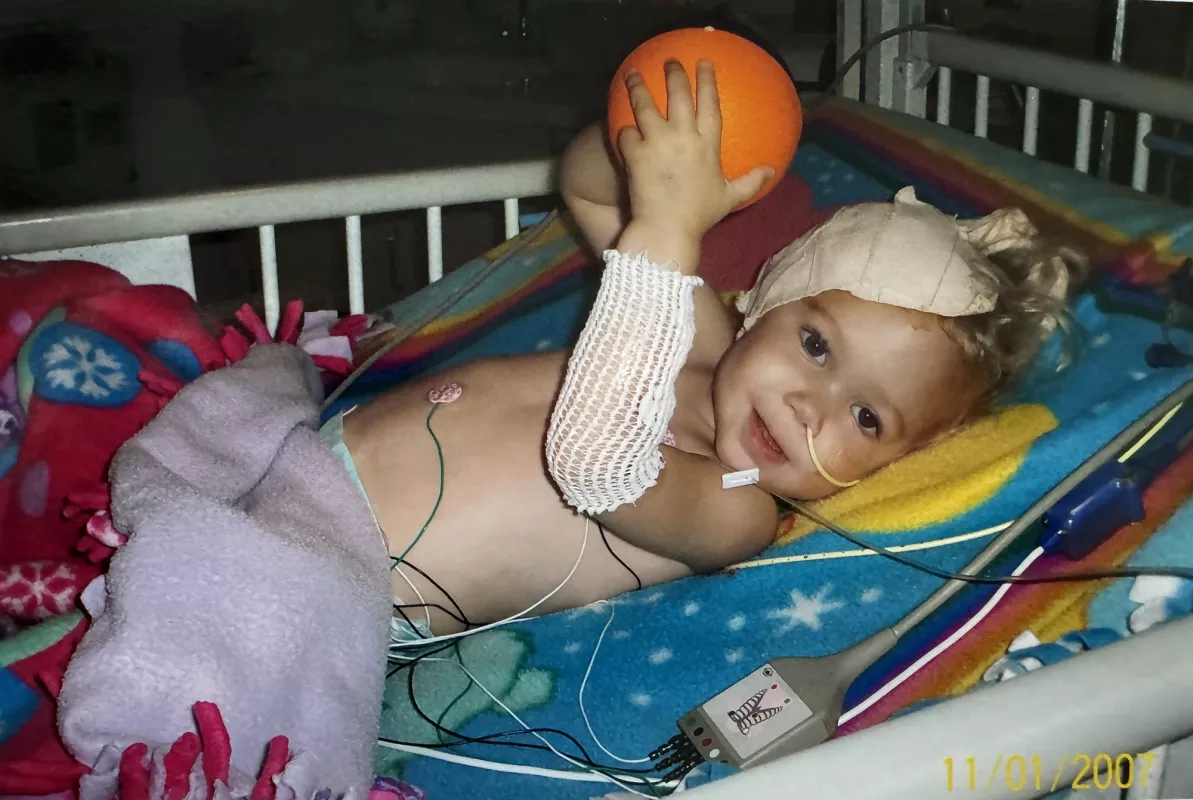
Faced with an almost impossible decision, the family was directed to Dr. Arnold Menezes, an experienced neurosurgeon at the University of Iowa Health Care Stead Family Children’s Hospital. He offered a slim chance. “No one else will operate on this, but I will,” Brooke remembers him saying. “She has maybe a 10% chance of survival, but if she goes home, she’ll have maybe two weeks to live.” With trembling hands and hope in their hearts, Brooke and David agreed to proceed. After an 11-hour surgery, Mya’s tumor was partially removed. It was a cancerous pilocytic astrocytoma, a rare brain tumor that originated from the star-shaped cells of her brain. Its location, deep in her brainstem, made complete removal impossible.
What followed was a grueling 74-week course of chemotherapy. Brooke and David were included in every step of her care plan, attending meetings with Mya’s team and ensuring every question was answered. “We never gave up hope,” Brooke says. “Having a plan helped us a lot. We knew she was an amazing fighter and she wasn’t going to give up.”.
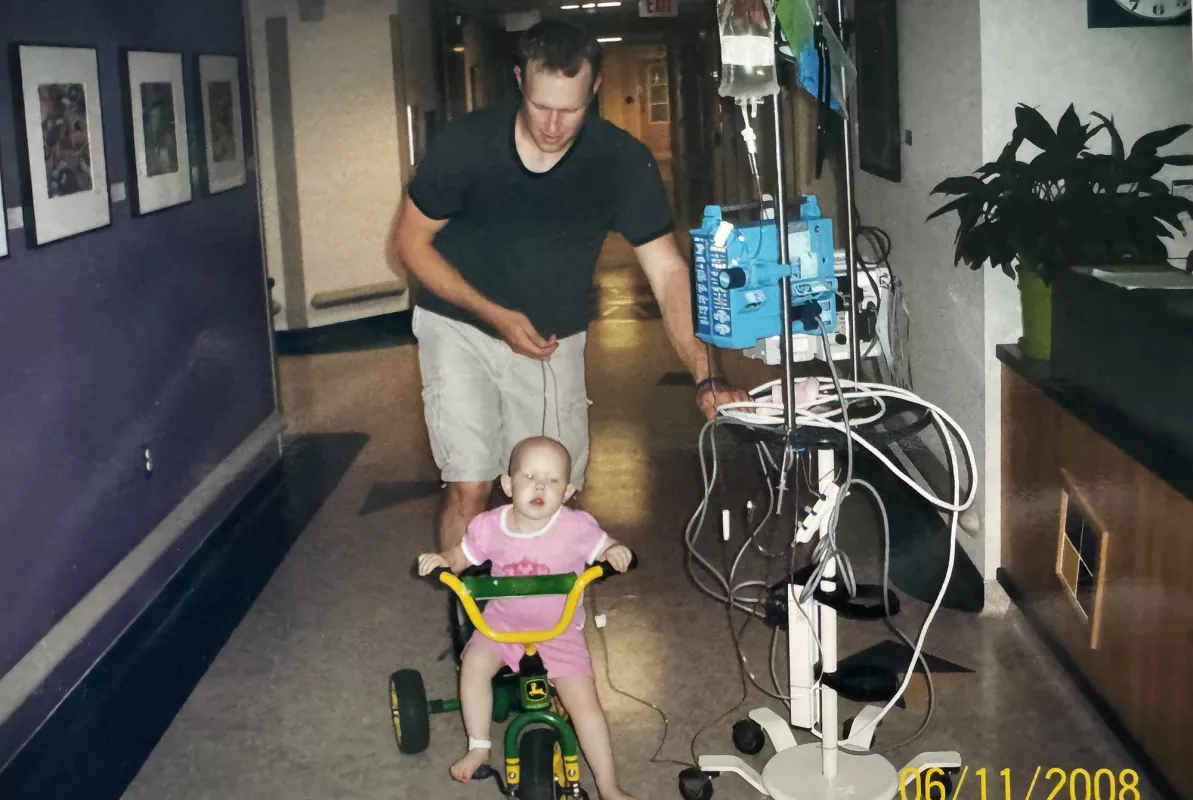
Even in the hospital, Mya’s team worked to make her feel like a child first, a patient second. Brooke recalls a Halloween when a nurse dressed Mya as a piglet and her younger sister, Leia, as a lobster, taking them trick-or-treating around the hospital. These moments, small but significant, allowed Mya to experience joy and normalcy amid the medical chaos. She learned to ride a tricycle, ride a bike, sing songs, and play games—all within the walls of the hospital that became her second home.
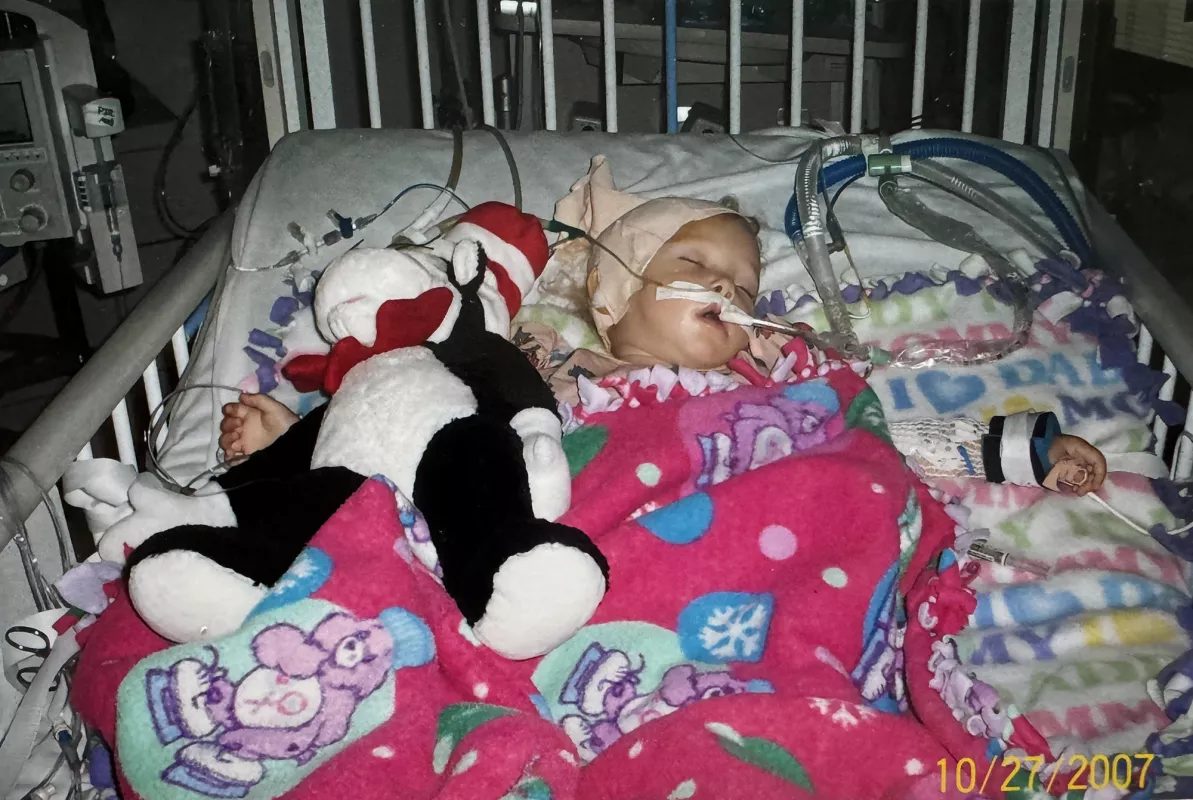
But life was far from simple. At age five, Mya relapsed. Another 74 weeks of chemotherapy followed, and for five years she remained strong. Then, at 12, a routine scan brought more bad news. The tumor persisted, and Mya’s body, along with her spirit, felt the strain. With the honesty of a teenager who had faced far more than anyone should, Mya asked her doctor, Dr. David Dickens, if she could stop treatment. “He listened to Mya every step of the way,” Brooke says. “He discussed the risks, and together, they chose a path that balanced hope and her well-being.” After three more weeks of treatment, Mya recovered, regaining her energy and her bright, lively personality.
Mya’s journey, however, was not just about fighting her own battles. Along the way, she discovered the power of giving back. During a hospital visit, she overheard another family struggling and decided to help. With leftover funds from a softball fundraiser, she initiated what would become the Mya Strong Foundation, dedicated to supporting pediatric oncology families. From funding therapy dogs to providing trips and creating moments of joy, Mya’s foundation embodies the kindness she has carried through every stage of her life. The annual Mya Strong Softball Tournament has grown from eight teams to nearly sixty, drawing communities together in support of families facing similar challenges.
Even as a teenager, Mya’s health continued to demand attention. A bone marrow mutation required regular blood draws, and medications left her with hearing loss, which she manages with hearing aids. Yet, despite these obstacles, Mya remains a vibrant, resilient young woman. At 18, she is a high school senior with aspirations to become a registered nurse, a dancer who loves choreography, and a young leader who inspires everyone she meets.
Reflecting on her daughter’s journey, Brooke says, “They don’t just know who she is as a patient; they know who she is as a person. We are so lucky to have such an amazing facility so close to us. This entire team saved our child’s life, and we are forever indebted to them for their care, love, and support.”.
Mya Gilchrist’s story is more than a tale of survival. It is a testament to courage, hope, and the unwavering human spirit. From a tiny toddler taking her first wobbly steps to a young woman giving back to families in need, Mya embodies the idea that even in the face of overwhelming adversity, one can choose strength, kindness, and hope. Her journey reminds us that life may test us in unimaginable ways—but with love, determination, and support, even the hardest battles can be met with grace.
“Six Months Gone: The Disappearance of Lilly and Jack Sullivan Still Haunts Nova Scotia’s Forests”.5654.
Six months. Two tiny beds still empty. And the forests of Nova Scotia whisper secrets no one wants to hear.
On a crisp May morning in 2025, Lilly Sullivan, six, and her younger brother Jack, four, vanished from their rural home on Gairloch Road in Pictou County. No screams. No signs of struggle. Just absence—a silence that stretched and grew with each passing hour. For a community used to open doors and quiet mornings, the sudden void was jarring, suffocating, and utterly incomprehensible.
In the early hours of May 2, their mother, Malehya Brooks-Murray, 29, a nurse at Colchester East Hants Health Centre, reported the children missing. She claimed she last checked on them at 6:30 a.m., finding their beds empty and the back door ajar, its latch reportedly broken. Jack, still in pull-up diapers, had been in Spider-Man pajamas; Lilly in her pink unicorn ones, blonde hair tousled from sleep. Their disappearance launched a six-month odyssey that would engulf Nova Scotia in grief, suspicion, and desperate search efforts.
Initial RCMP reports echoed a tentative hope: “They wandered off.” Volunteers scoured bogs and forests, cadaver dogs combed creeks, and helicopters buzzed overhead, thermal cameras scanning for a hint of life. Yet with each passing day, hope eroded. Shreds of a pink blanket—Lilly’s favorite—were found in household trash. Thousands of hours of video were reviewed. Tips poured in from far and wide. And still, the children were nowhere.
The Sullivan case quickly became a mosaic of small, eerie details. Unsealed court documents in August revealed polygraph tests: Brooks-Murray’s results showed “deception indicators” when questioned about her children’s last movements; stepfather Daniel Martell’s results were inconclusive, raising quiet eyebrows. A neighbor reported seeing a dark SUV circling at 3 a.m., though no ownership could be traced. Meanwhile, biological father Cody Sullivan, estranged for three years, confirmed he had been in New Brunswick the night the children disappeared and had no contact with them—a detail at odds with initial assumptions.
As weeks turned to months, the search became as much about forensic scrutiny as about physical hunting. Cadaver dogs swept 40 kilometers near the home, repeatedly hitting on nothing but wildlife. Pink blanket fragments, a boy’s shirt, discarded diapers, and even a geocache from 2014 with Martell’s name offered tantalizing hints that fizzled under closer inspection. Volunteers, friends, and family combed every inch of land, following leads from riverbanks to ridges, only to find frustration in place of certainty.
For the family, grief became a living, breathing entity. Paternal grandmother Belynda Gray, relentless in her advocacy, tirelessly coordinated volunteers, posted online appeals, and attended every search. “Three months in, and we’re no closer,” she told CBC. “Every dawn breaks the same way—with hope, then despair.” Social media became both lifeline and battleground. Threads on X and Reddit dissected timelines, scrutinized inconsistencies in official reports, and debated possible scenarios. For armchair detectives and locals alike, the woods were both a sanctuary and a snare.
The timeline of May 1–2 remains jagged and fragmented. The children were kept home from Salt Springs Elementary due to illness. Brooks-Murray said they were last seen at 10 p.m. May 1. That night, she claimed to leave for family elsewhere, leaving Martell at the home, though he maintained he had work obligations. By 10 a.m. the next morning, with beds empty and doors ajar, the alarm was raised. Every detail—from toy placement to backpack location—became a scrutinized clue in a case that seemed to defy ordinary logic.
As summer turned to fall, investigations expanded. Toll footage from Cobequid Pass, surveillance from New Glasgow, and phone records were meticulously reviewed. Yet gaps remained. Every lead seemed to dissolve: sightings that couldn’t be verified, footprints washed out by rain, cadaver dogs signaling false positives, tips that came too late. Meanwhile, the reward for information grew to $150,000—a testament to the desperation of a province unwilling to surrender hope.
Volunteer searches in November rekindled faint embers of possibility. Cheryl Robinson, a family friend, and others ventured into treacherous terrain, pre-snow searches through bogs and ravines. A geocache bearing Martell’s name from years prior was found—but it offered no answers, only questions. Gray’s frustration was palpable: “We’re racing winter again. Nobody’s giving up.” The cold added a cruel urgency. In Nova Scotia, once frost sets, the woods become even less forgiving, covering potential traces under snow and ice.
Experts caution that rural disappearances like the Sullivans’ often involve complexities hidden from the casual eye. Dr. Elena Vasquez, a former RCMP profiler, noted: “Cases like this hinge on familial dynamics and environmental concealment. Six months without a confirmed sighting puts forensic science and tip integrity to the test.” Veteran search coordinator Kevin Hargrove added: “This terrain is brutal—bogs, hypothermia risks, wildlife. Survival alone is statistically improbable.”.
The public, meanwhile, oscillates between hope and despair. Local schools still display drawings and messages: “Come Home, Lilly” scrawled in crayon, tiny hands’ desperate pleas frozen on paper. The community’s pain is amplified by the slow churn of official updates and the viral spread of speculation online. Conspiracy theories—some implicating step-parents, some external parties—have taken root, a reflection of society’s struggle to understand what rational explanations cannot yet satisfy.
As November fades, the Sullivan home stands silent, a monument to the unknown. Memorial ribbons flutter in the cold wind; toys left untouched whisper of absence. Gray’s plea echoes in empty hallways and social media feeds alike: “Pray for peace that surpasses understanding.” The RCMP continues to investigate, their officers combing every lead, from minor anomalies in toll records to cross-border contacts, refusing to let bureaucracy or fatigue curtail the search.
Six months later, Pictou County’s woods remain an enigma. Lilly’s strawberry backpack, Jack’s Spider-Man pull-ups, remnants of ordinary childhood, are now talismans of urgency, each item a reminder that innocence was swallowed by mystery. Will the forests yield their secrets? Or will the children remain hidden, their story suspended in the shadowed trees, leaving a family to confront the unbearable weight of unanswered questions?
For now, every sunrise brings both hope and dread. Every volunteer, every tip, every patrol feels like a lifeline cast into darkness. And while winter threatens to cover the trails in frost, the community continues to fight against silence, believing that somewhere, somehow, Lilly and Jack’s story can still reach a happy ending.